
Trading Short-Term & Long-Term Indices Price Period of Moving Average
A Stock Index trader can choose to adjust the Indices price periods used to calculate the moving average.
How Do I Trade Indices with Moving Average?
If a trader uses short price periods then the MA will react faster to the changes in Indices price.
For example if a trader uses the 7 day Stock Index moving average then, moving average indicator will react to the Indices price change much faster than a 14 day or 21 day Stock Index MA Moving Average would. However, using short time Indices price periods to calculate the MA might result in the indicator giving false Indices trading signals (whipsaws).
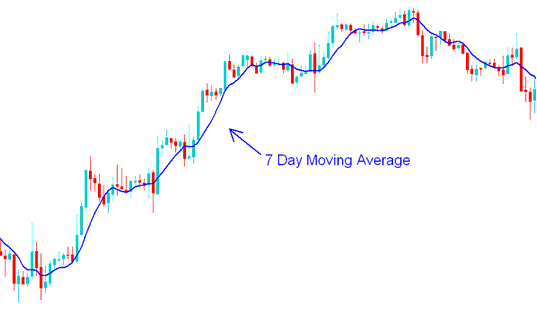
7 Day MA Moving Average - MA Moving Average Indices Trade Strategies
If another trader uses longer time periods then the MA will react to price changes much slower.
For example, if a trader uses the 14 day MA then the average will be less prone to whipsaws but it'll react much slower.
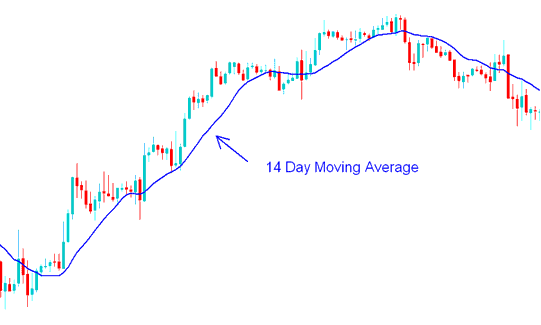
14 Day MA Moving Average - MA Moving Average Indices Trade Strategy Example
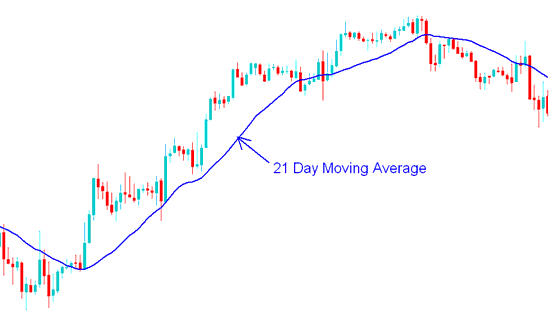
21 Day MA Moving Average - MA Moving Average Indices Trade Strategies Example