Continuation Stock Indices Candle Patterns - Doji Candle Pattern
Doji Candles Pattern
Doji Candle Pattern is a candlestick pattern with same opening & closing indices price. There are various types of doji candlesticks patterns that form on stock indices charts.
following examples show various candle patterns of the doji candle:
Long-legged doji candlestick pattern has long upper and lower shadows with opening and closing stock indices price at the middle. When the Long legged doji candlestick pattern appears on a Indices Trading chart it indicates indecision between stock indices traders, buyer & the sellers.
Shown Below is example image image of the Long Legged Doji Stock Indices Candle Pattern
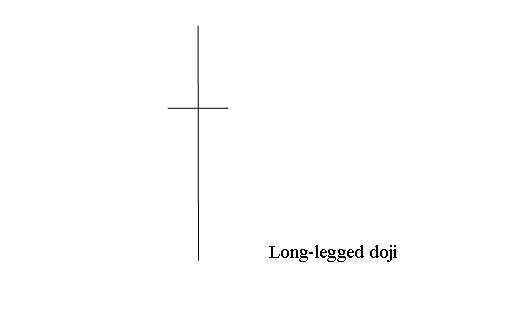
- How to Trade Doji Candlesticks Patterns - How to Interpret Doji Candlesticks Pattern
Cross Doji Candlestick Pattern
Cross doji candle pattern has a long lower shadow and a short upper shadow and the open and close of the day is same.
This cross doji candlestick pattern pops up at market turning points & warns of a possible indices trend reversal in the Indices. Below is as example of this cross doji candlestick pattern formation
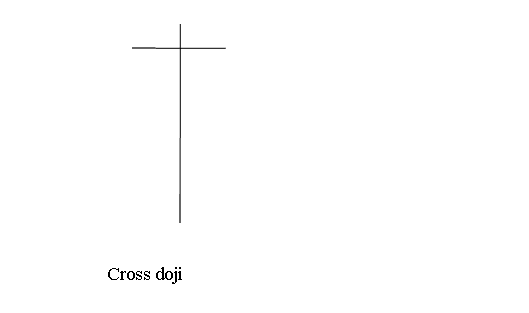
- Cross Doji Pattern - Doji Stock Indices Candle Patterns - Doji Consolidation Stock Indices Candles Pattern - Continuation Stock Indices Candle Patterns - Doji Candlesticks Patterns
Inverted Cross Doji Candle Pattern
Inverted cross doji candlestick pattern have a long upper shadow and a short lower shadow and the open & close is the same.
This inverted doji candle pattern reversal indices pattern pops up at market turning points & warns of a possible indices trend reversal. Below is example
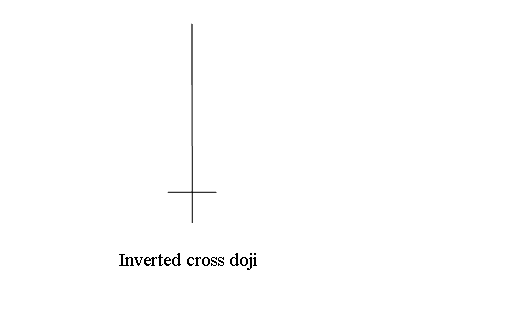
- Inverted Cross Doji Candle Pattern
Technical Analysis of Doji Candlesticks Patterns - All doji candles pattern show indecision in the stock indices trading market indices trend - this is because at the top of indices trend the buyers were in control, at the bottom of the indices trend the sellers were in control but none of them could gain control and at the close of the stock indices trading market the stock indices price closed unchanged at the same stock indices price as the opening indices price. This doji candlestick pattern shows that the overall stock indices price movement for that day was zero pips or just a minimum range of 1-3 pips. Reading these doji candlestick patterns require very small pip movement between the opening stock indices price and closing stock indices price.
