Trailing Stop Loss Indices Order Levels Stock Indices Technical Analysis and Trailing Stop Loss Indices Order Levels Trading Signals
Created by Tushar Chande.
This is a volatility based indicator that is used to estimate levels to set stoploss levels. Distance at which it estimates the trailing stop level is determined based on market volatility.
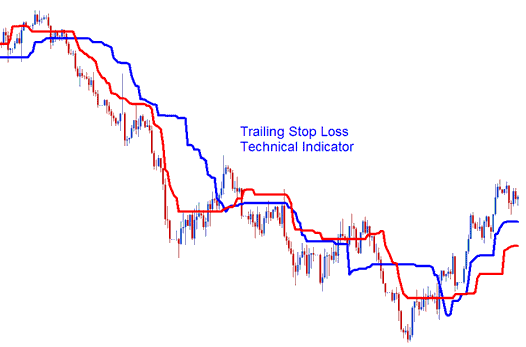
The Levels of the 2 lines, these 2 lines represent:
- Long Stop Level - Blue Line
- Short Stop Level - Red Line
The long stop level line has a much wider range in terms of where it trails stop-loss as compared to the short stop level which implements a tight stop-loss.
This stock indices indicator is volatility based when it comes to trailing and following the stock indices price action. Trailing Stop Levels will trail the above the stock indices price in a downward market indices trend and trails below the stock indices price in an upward market trend.
Stock Indices Technical Analysis & How to Generate Signals
These will be calculated using volatility to calculate where to draw the indicator - this is used to figure out what levels to set stop losses.
Upward Stock Indices Trading Trend
In an upwards indices trend these levels will follow below the stock indices price. The trader can use either the short stop level line to set up a tight stop or the long stop level to set a stop loss that is not very tight. As the stock indices price goes higher the trailing level also goes higher. An exit signal is generated when stock indices price crosses below these levels.
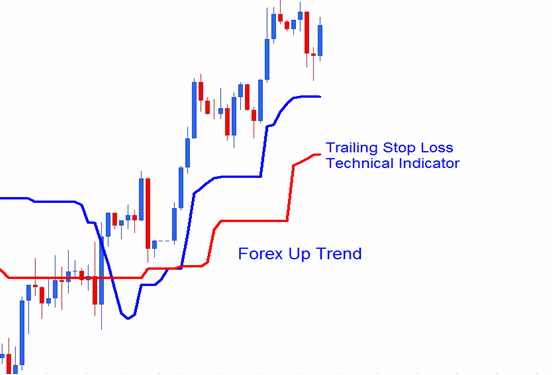
Indices Uptrend
Downwards Indices Trading Trend
In a downward indices trend the stop loss levels will trail above the stock indices price this two levels can be used to set these levels. As the stock indices price drops further these levels will continue to drop lower and follow the stock indices price lower. An exit signal is generated when stock indices price crosses above these levels.
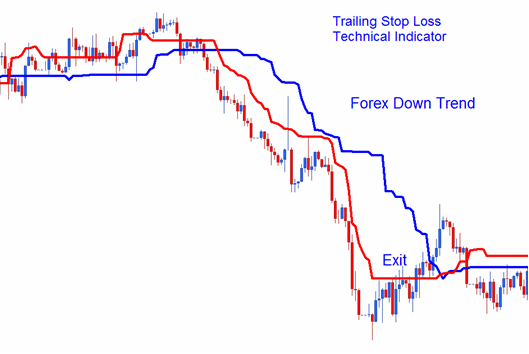
Indices Downtrend
When stock indices price starts to retrace these levels will not retrace but will remain at their levels, this will mean at some point the trade will be closed by the trailing stop loss.
